
The Best Dive Sites
in El Nido, Palawan
Often underestimated El Nido’s reefs offer outstanding diving — from shallow coral gardens to dramatic walls and hidden swim-throughs. Below are our top recommended dive sites for 2025, with quick facts for depth, skill level and what you’ll see. Join Tabanka Divers' daily dive-trips, go in small groups and visit only the best spots in Bacuit Bay.
Dive Map El Nido

South Miniloc
South Miniloc is a signature El Nido dive site known for its vibrant coral gardens, easy-entry slopes and frequent turtle sightings. The site offers a variety of profiles — from shallow sheltered gardens perfect for Open Water students to slightly deeper bommies that attract schooling reef fish. Visibility is usually very good (10–25 m) outside monsoon months, and currents are typically mild, which makes it a dependable choice for mixed-ability groups and underwater photographers. Expect to see hawksbill and green turtles, featherstars, anemonefish and colorful reef fish around bommies and ledges. We often schedule this site early in the day when light is best for photos. Safety note: while most dives here suit all certified divers, instructors will brief on where to find calmer anchor points and how to manage brief current surges.
At-a-glance: Plateau · Depth 5–40 m · For Certified Diver · medium to strong currents · Highlights: best chance for Pelagic, turtles, School of Snapper & Barracuda, Ribbon Eel, Juvenile Yellow Boxfish, macro.

Entalula Wall
At-a-glance: Wall · Depth 5–32 m · For certified Diver · Can have mild currents · Highlights: Marble Ray resting under Overhang, 8 different species of Anemone Fish, Ghost Pipefish, Leave Scorpion Fish, Turtles.
Entalula is one of El Nido’s signature wall dives, framed by towering limestone cliffs and a reef that drops elegantly onto sandy patches below. The top of the reef features hard-coral terraces between 5–12 m, alive with damselfish, parrotfish, and schools of fusiliers. Following the wall down, you’ll see vibrant soft corals, sea whips, and colorful sea fans swaying gently in the current, often with green turtles gliding by or jacks flashing through the blue. For macro enthusiasts, the cracks and ledges hide nudibranchs, shrimps, and other small critters, rewarding patient eyes. And for an extra challenge, divers often try to spot all eight species of anemonefish that can be found here—sometimes in a single dive.

North Rock
North Rock was long one of El Nido’s signature sites — famous for table corals, large cleaning stations and pelagic action. Unfortunately, heavy storm damage from Typhoon Odetta in 2022 severely impacted the shallow coral structures. As a result, North Rock is currently not part of our regular daily schedule while we give the reef time to recover and avoid further stress.
If conditions improve and restoration work or natural recovery progresses, we’ll re-evaluate and announce guided returns. For now, divers seeking similar experiences can choose alternate advanced sites we recommend — ask our team about the best drift or pelagic options available on the day.
At-a-glance: Temporarily off our daily schedule due to severe coral damage from typhoon Odetta 2022 — we’re letting the reef recover.

Paglugaban
At-a-glance: Slope, Wall and Labyrinth · Depth 5–30 m · For certified Diver · Mostly calm, we turn the dive when facing a current at the end of the Stone Labyrinth · Highlights: Unique Rock-Formations, Pelagic.
Paglugaban lies beneath towering limestone cliffs and offers a mix of reef slope, scattered coral blocks, and small caverns. The setting is dramatic—sunlight filters down through shallow water while shadows fall across rocky overhangs. Divers can spend time weaving between coral outcrops, exploring recesses that hide macro life, or simply floating above the reef to watch schools of reef fish. Its sheltered position often makes it a dependable site when other parts of Bacuit Bay are wind-affected. On a lucky day we see Eagle Ray or Manta Ray passing by the outer Reef and even Dugong have been spotted here.
Nat-Nat
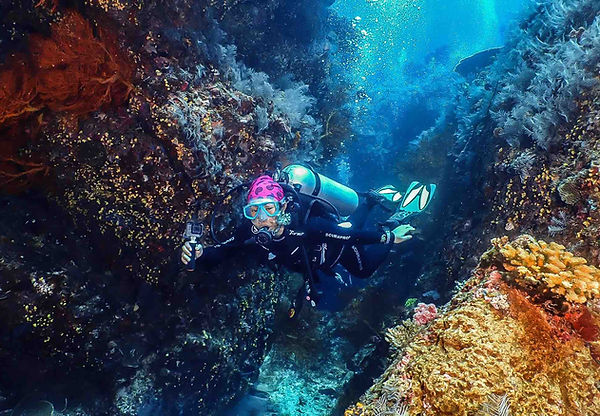
Nat-Nat is a colorful reef slope near town. As its a regular stop for training dives some might think it makes it less of Dive Site. The opposite is the case: Shallow terraces of hard coral stretch out from the beach, broken up by sandy lanes that make navigation simple. Green turtles, stingrays, and even shy octopus are common visitors and it is the home of TABANKA - the local name for JAWFISH. In the past years encounters with Dugongs got more regular and gives El Nidos' House-Reef the recognition it truly deserves.
At-a-glance: shallow slope · Depth 5–28 m · For all Levels · Occasionally stronger currents, can be a drift dive · Highlights: Turtles, Helmut Gurnard, Tabanka = Jawfish, Eagle Ray, DUGONG.

Twin Rocks
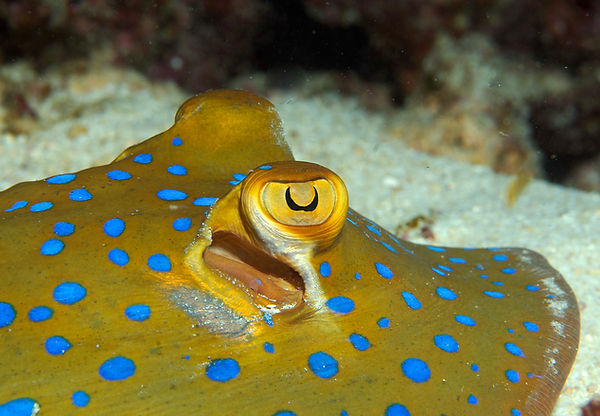
At-a-glance: Slope · Depth 5–35 m · For certified Diver · Can be a drift dive · Highlights: chance for Pelagic, Turtles, Eagle Ray, School of Jacks, Blue-spotted Stingray, Pipefish.
Twin Rocks is named after two limestone outcrops that rise dramatically from the sandy seabed, creating natural channels filled with fish. These rocky structures act as magnets for marine life—schools of fusiliers, batfish, and jacks often swirl around them. The rocks themselves are covered in soft corals, sponges, and sea whips, which provide hiding spots for nudibranchs and crustaceans. The mix of features—rock walls, sandy patches, and coral shelves—gives the dive a sense of variety in just one site. With the right current, Twin Rocks becomes a mini-drift full of action, while on calm days it’s easy to circle the formations at leisure.
Popolcan UW Forest
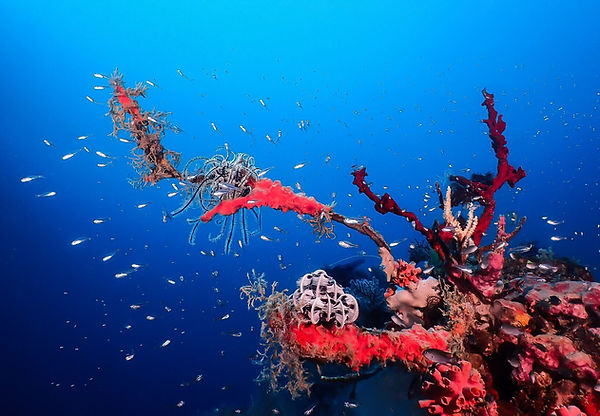
Popolcan is a deep dive that feels like diving over a living forest. Table corals, branching colonies, and soft coral patches dominate the slope, providing shelter for reef fish and macro creatures. Schools of fusiliers and surgeonfish sweep over the reef while anthias hover above coral heads, adding constant motion and color. For divers who prefer to slow down, the cracks and rubble zones are full of nudibranchs, pipefish, and decorator crabs. The reef’s open layout makes it easy to explore different routes in a single dive, giving both wide-angle shooters and macro hunters something to enjoy.
At-a-glance: Slope with Pinnacles in the deep sandy bottom · Depth 10–35 m · For Experienced Diver · Changing currents and visibility · Highlights: Eagle Ray, School of Fish, Coral Gardens, good for wide-angle.
Dilumacad Tunnel
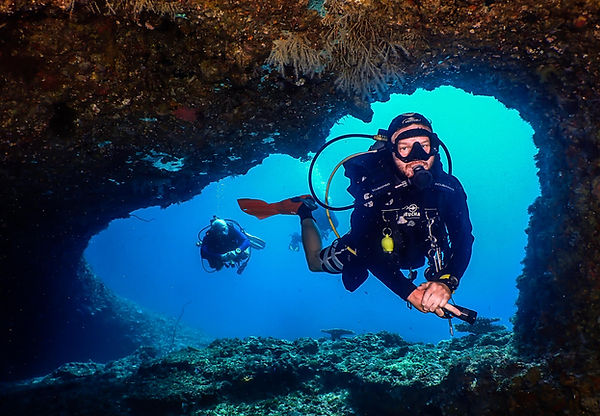
At-a-glance: Cavern / Tunnel · Depth average 12-14 m · For Experieced Diver (AOWD and +30 logged Dives) · Flashlights required · Highlights: Carrier Crabs, Banded Pipefish, Electric Clam, 1000nds of Glassfish, plus pelagic encounters outside.
On the seaward side of Dilumacad Island, better known as Helicopter Island, lies one of El Nido’s most famous adventure dives. A rocky entrance at 12–15 m leads into a natural tunnel that cuts through the limestone and exits on the far side of the reef. Inside, light beams create dramatic effects as they shine through openings, illuminating glassfish clouds and sponges along the walls. The tunnel is only about 35m long, but the overhead environment adds a sense of thrill and requires careful buoyancy control. Outside the exits, the reef continues with turtles, schools of fusiliers, and even whale-shark passing by.
Paradise Beach
Paradise Beach is exactly what its name promises: a shallow, sunlit reef beside a white-sand beach. To be fair: the corals here are not outstanding. Mostly its the playground for Beginners. But experienced diver know, what to look for: hidden gems! Have you seen a Sea Moth or Flamboyant Cuttlefish before? Chocolate Starfish and Seahorse? Ghost-pipe Fish? Wonder why Jellyfish are upside-down stuck in the sandy bottom? Look bellow and find out that they are turned into armor for deco crabs. Because the site is shallow, dives can last up to an hour, allowing time to discover small details in the sand. Photographers love the natural light and the calm conditions, while snorkelers above enjoy the same reef scenery.
At-a-glance: Sandy Slope · Depth 4-18m · For Beginner and Macro-Lover · Highlights: Flamboyant Cuttlefish, Ornate Ghost Pipefish, Seahorse, Sea Moths, Banded Sea-snake.

Tabanka Reef
At-a-glance: Slope · 6-18 m · For all Levels · Highlights: Lonely Dive, Great Corals, Eagle Ray, Squid Eggs being eaten up by hungry Turtles.
Tucked away from the usual island-hopping routes, Tabanka Reef is one of those places we almost hesitate to share. It doesn’t appear in most guidebooks, and only a handful of local dive pros know its full potential. The reef is a mix of untouched coral patches, gentle slopes, and sandy channels that attract both reef residents and passing pelagics. Because it is rarely visited, the marine life here is more relaxed and less disturbed, giving divers the chance to see natural behaviors at close range. For us at Tabanka Divers, it has become a kind of “home reef”—a secret site we love to introduce to small groups looking for something beyond the standard dive circuit. And of course it is home to the REAL Tabanka - which is the local name for JAWFISH.
